One catalogue, two buyers: IOKA
A Dubai property portal where half the visitors want somewhere to live and half want somewhere to put money.
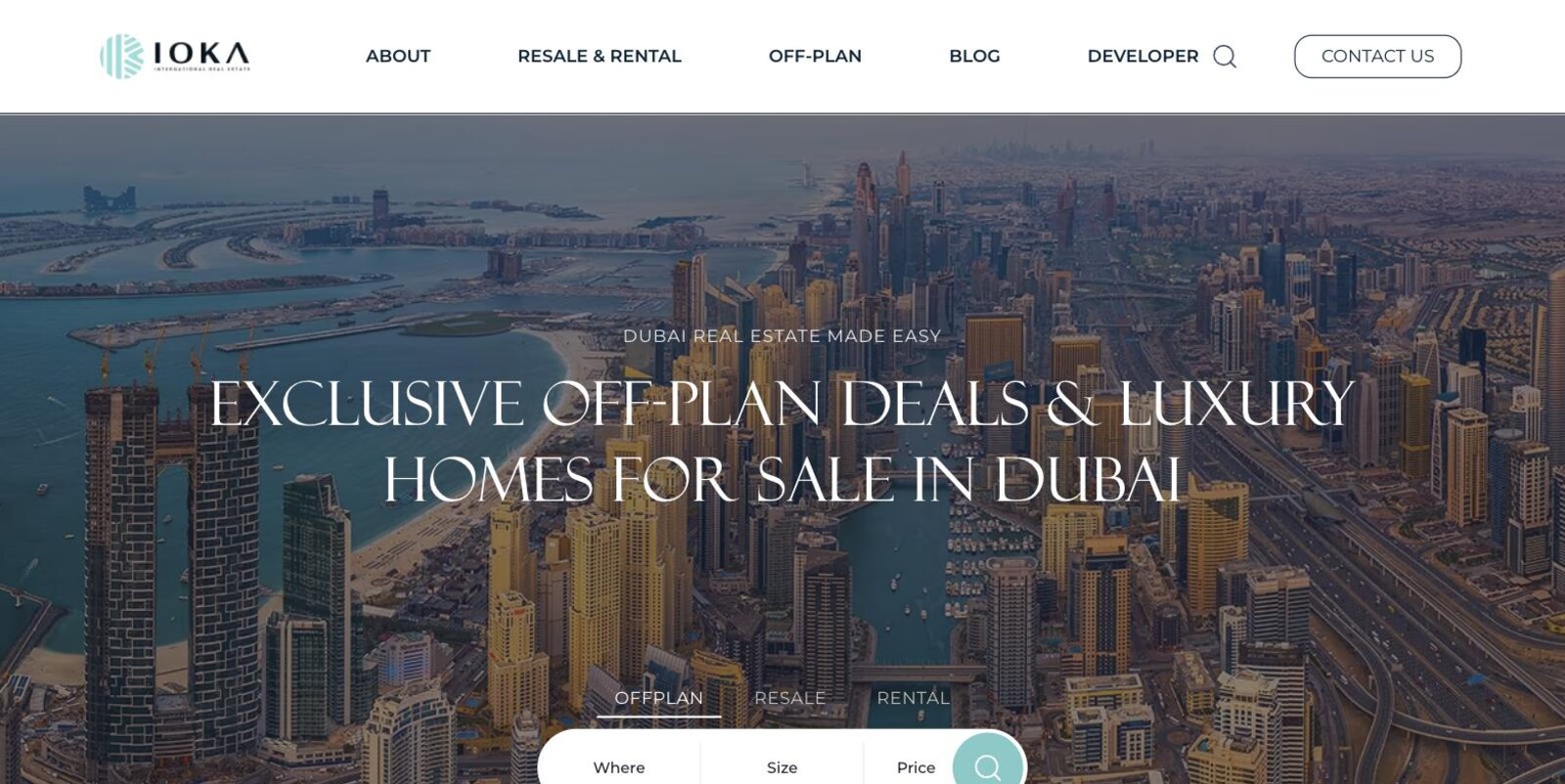
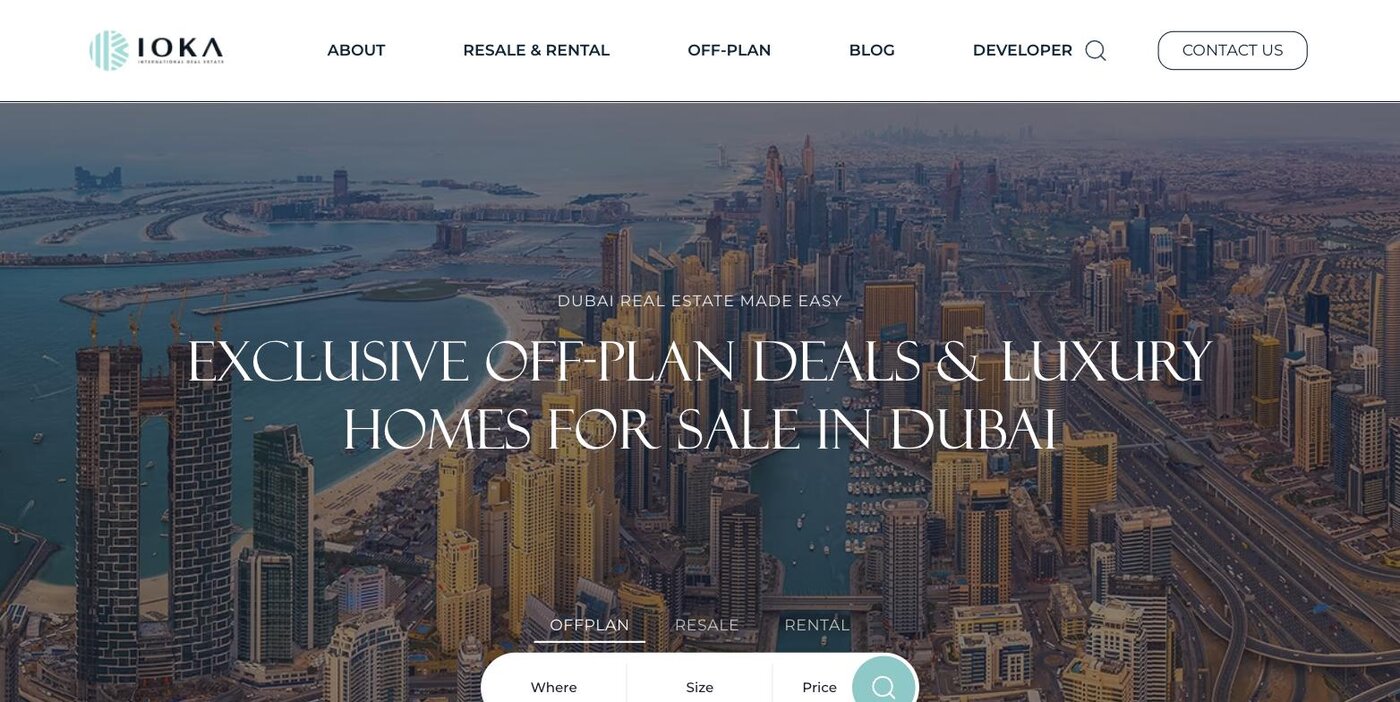
The same listing has to answer two questions that barely overlap.
Someone relocating to Dubai wants to picture a life: the light in the room, the walk to the beach, the school. Someone buying the identical apartment as an asset wants yield, payment plan, handover date and how quickly it can be resold.
Most property sites pick one of those and quietly fail the other. Dubai cannot — off-plan investment and residential search sit in the same catalogue, and a broker's whole business is being credible to both.
There is also a stranger problem underneath: a large share of the inventory does not exist yet. Off-plan means the buyer is committing to a render, a floor plan and a completion date.
Intent is the first filter, not price
Off-plan, resale and rental are not categories of property. They are three different reasons for being on the site, and asking that first makes every screen after it simpler.
Nobody is browsing. They arrive already knowing whether this is a home or a position.
That is why the intent switch sits above the search fields rather than inside the filters. Choosing off-plan, resale or rental changes what the rest of the form should even ask — a rental shopper does not care about payment plans, an investor does not care about move-in dates.
It also resolves the tone problem. The same photograph can be sold as a lifestyle or as an asset; deciding which one the visitor came for means the page no longer has to do both at once.
Intent first, then inventory, then proof.
The search opens on a three-way switch and only then asks where, how big and how much. Listings inherit that context, so an off-plan card leads with handover and payment structure while a rental card leads with availability.
Because much of the stock is unbuilt, the page has to earn trust it cannot demonstrate. That work is done by who is standing behind the deal: named developers, named team, real reviews.
Off-plan, resale, rental as the first choice
The reason for visiting, asked before any property is shown.
Three intents, one control, at the top of the fold. Everything downstream — fields, card content, sort order — is derived from it, which keeps a catalogue of tens of thousands navigable without a filter panel.
Areas, not an endless list
Dubai is bought by district, so the district is the browse unit.
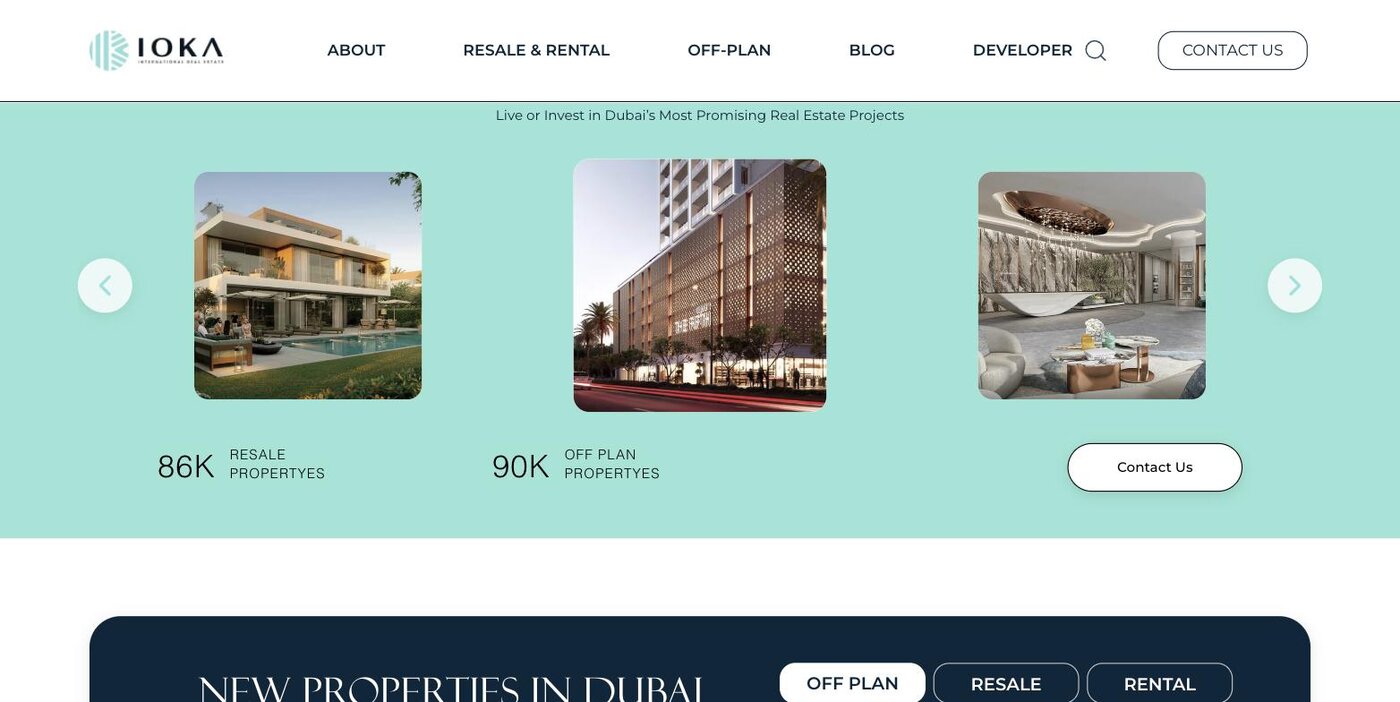
Buyers here talk in place names — Palm Jumeirah, Dubai Hills, JVT — long before they talk in bedrooms. Leading with area cards matches how the decision is actually narrowed and gives the imagery room to work.
Developer names doing the credibility
Emaar, Sobha, DAMAC, Binghatti, Aldar in their own right.
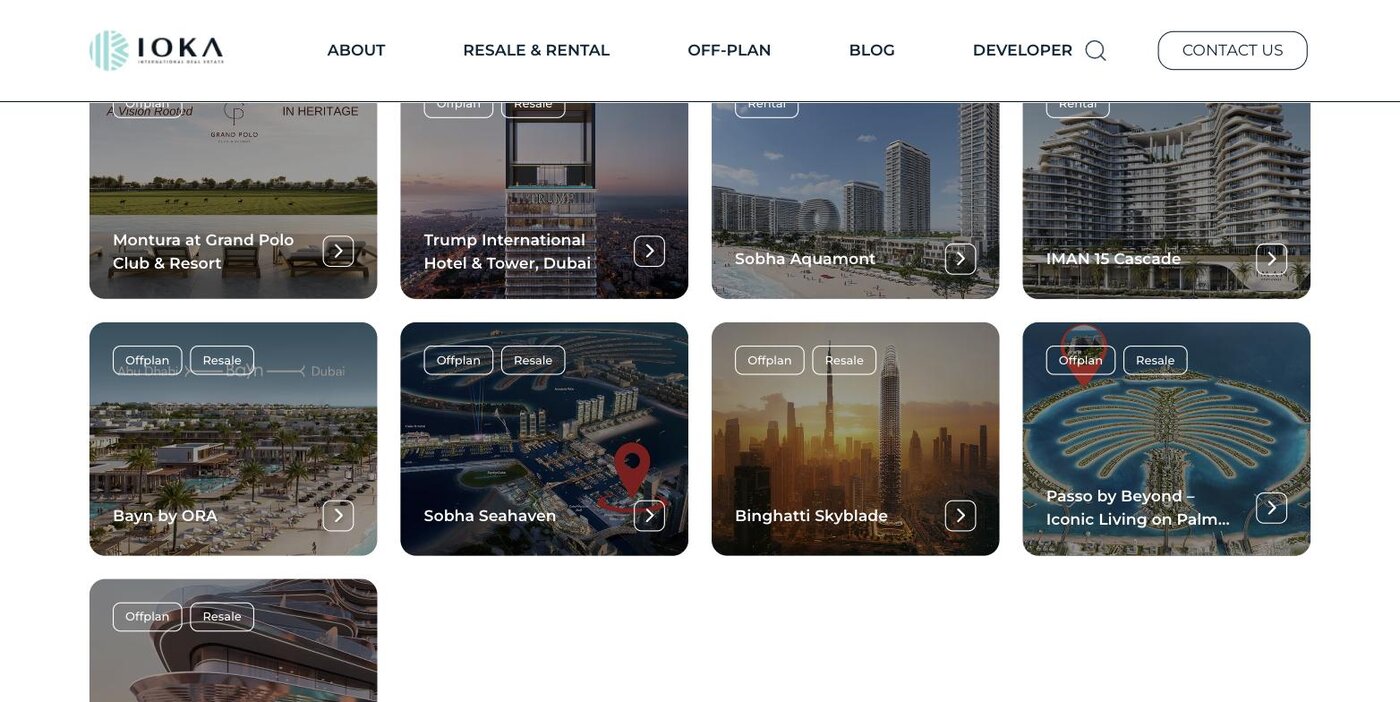
When the product is a building that does not exist, the developer's reputation is the product guarantee. Their marks are given real estate on the page rather than being hidden in a footer strip.
A named team, not a contact form
Founders and brokers with faces, tenure and reviews.
A first-time overseas buyer is wiring a deposit to a company they found on Instagram. Showing who they would be dealing with does more for conversion than any amount of interface polish.
A portal that sorts people before it sorts property.
IOKA runs at ioka.ae as the agency's storefront across off-plan, resale and rental, alongside the blog that carries the market analysis the investor audience arrives for.
The structure has absorbed a growing catalogue and a widening developer roster without the navigation needing to change.
What I would keep from this one
The instinct on a listings product is to build a better filter panel. The more useful move was one question above the fold, because it made most of the filtering unnecessary.
The other lesson was about trust as a design material rather than a content afterthought. On a catalogue of buildings that are still renders, the team page and the developer logos are load-bearing — they are doing the job the product photography cannot.